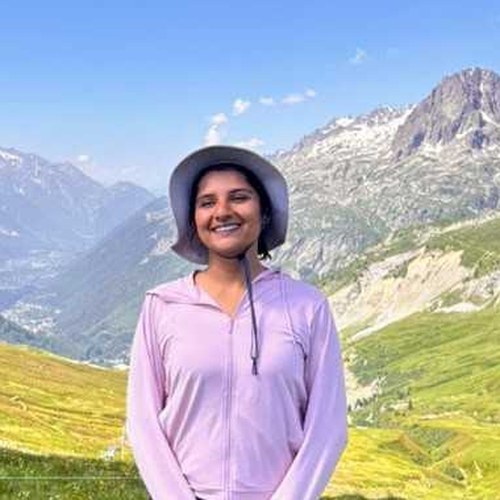
I am a PhD researcher at the Institute for Human & Machine Cognition (IHMC) and the University of West Florida, working at the intersection of reinforcement learning, classical control, and perception. My research explores how humanoid robots can maintain balance, recover from failure, exploit useful contacts in their environment, and return to purposeful behavior.
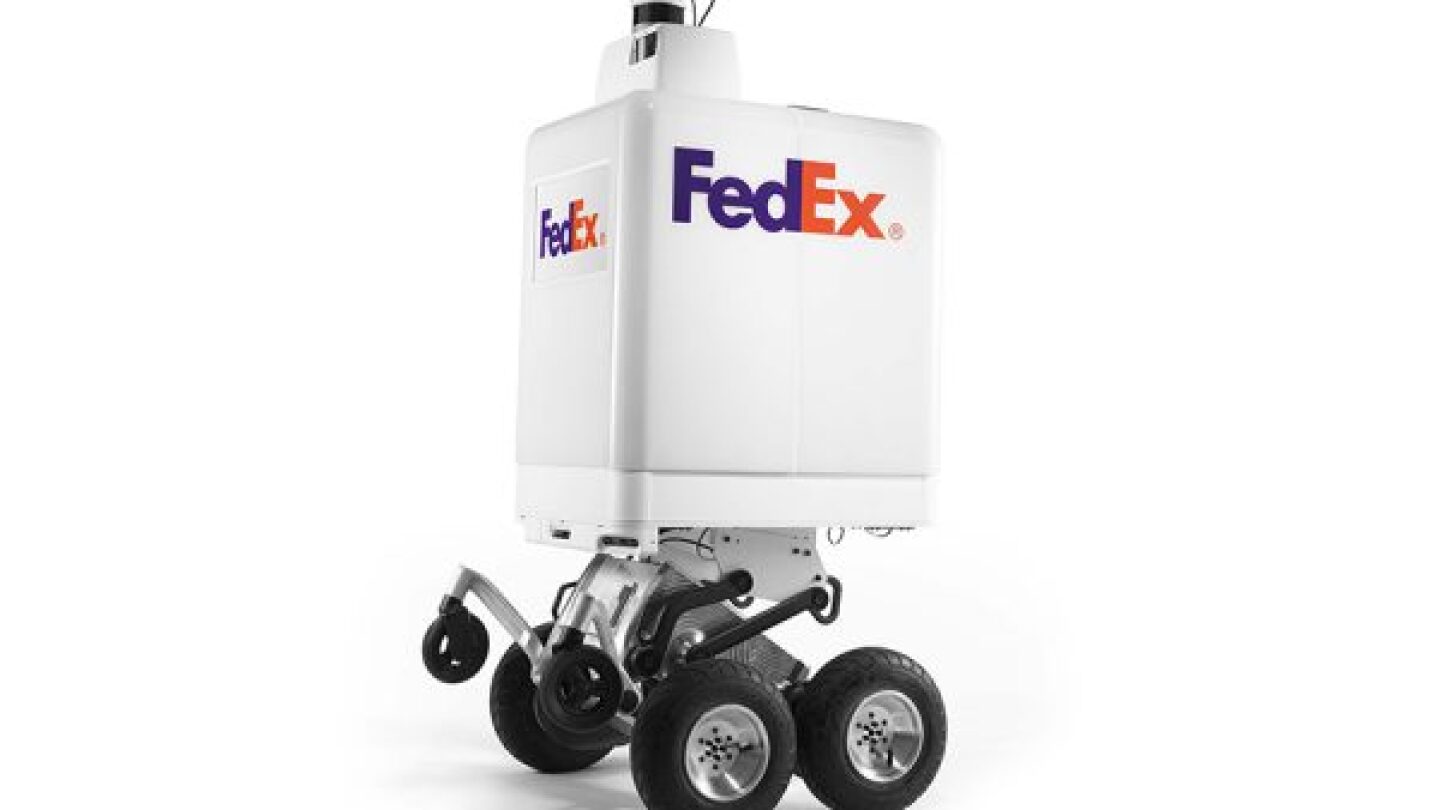
I combine physically meaningful representations of balance and contact with reinforcement learning and perception to build robots that reason about their own bodies and interact intelligently with the physical world. Before my PhD, I was a Research Engineer at DEKA Research & Development, building perception and calibration systems for FedEx’s autonomous delivery robot, ROXO.
Research
Humanoid robots operate where unexpected events are unavoidable: disturbances, falls, and unplanned contact are the norm, not the exception. My work asks how a robot can use learning, physical structure, and its environment to stay capable when things go wrong, across three areas:
Physics-embedded RL: capture point, centroidal momentum, and contact stability shape rewards and critic inputs, not just raw observations.
Environment-assisted recovery: perception-guided policies that brace against walls and tables when balance alone isn’t enough.
Composable behavior: specialized skills combined into one system that walks, recovers, and resumes its task, without hand-designed mode switches.
Work in progressin preparation, target: IEEE Robotics and Automation Letters (RA-L), 2027
N. Poddar et al.
A perception-guided framework for humanoid recovery that combines walking, get-up, and environment-assisted bracing. Specialized behaviors are warm-started into trainable experts and recombined through a learned policy conditioned on a robot-centric 3D occupancy representation, allowing the robot to detect and transiently brace against nearby surfaces during recovery.
HANDOFF: Humanoid Agentic Task-Space Whole-Body Control via Distilled Complementary Teachers
Under reviewCoRL 2026 submission
L. Yang, J. Li, N. Poddar, Y. Hou, G. Huh, R. Griffin, G. Gkioxari, A. D. Ames
Distills complementary teacher policies into a single agentic whole-body controller for task-space humanoid manipulation.
Embedding Classical Balance Control Principles in Reinforcement Learning for Humanoid Recovery
SubmittedIEEE-RAS International Conference on Humanoid Robots (Humanoids), 2026 · arXiv
N. Poddar et al.
A reinforcement-learning framework that embeds capture point, center-of-mass state, and centroidal momentum into privileged critic inputs and physics-guided rewards. The learned policy spans disturbance rejection through multi-contact stand-up recovery on the Unitree H1-2. The policy achieved 93.4% recovery success across 10,000 trials, with validation through MuJoCo sim-to-sim testing and zero-shot hardware deployment.
Accelerating Classical Path Planning via Learned Search Space Reduction
AIAA SciTech Forum, 2026 · Nominated for Best Student Paper · AIAA Arc
N. Poddar, B. Mishra, G. Clark, H. E. Sevil, R. Griffin
A learned model reduces the search space explored by classical planners such as A* and RRT, focusing computation on regions more likely to contain high-quality solutions while maintaining solution quality.
Anticipatory and Adaptive Footstep Streaming for Teleoperated Bipedal Robots
L. Penco, B. Park, S. Fasano, N. Poddar, S. McCrory, N. Kitchel, T. Bialek, D. Anderson, D. Calvert, R. Griffin
A footstep-streaming system that anticipates operator motion and adapts footsteps for teleoperated bipedal locomotion over uneven terrain, validated on the Nadia humanoid robot.
Jan 2024 – present · Advisor: Prof. Robert Griffin
Developing learning-based methods for humanoid balance, recovery, locomotion, and environmental interaction.
Built a physics-informed asymmetric actor–critic framework incorporating capture point, center-of-mass dynamics, and centroidal momentum as privileged training signals.
Developed perception-guided recovery using walking, get-up, and environment-assisted bracing behaviors conditioned on 3D environmental representations.
Achieved 93.4% recovery success across 10,000 H1-2 trials, followed by MuJoCo sim-to-sim validation and zero-shot hardware deployment at 50 Hz.
Designed controlled ablations to evaluate the contribution of privileged physical information, physics-informed rewards, and curriculum learning.
Built custom TensorBoard diagnostics that trace per-layer weight and gradient behavior, tracing intermittent training instability to unbounded growth in a perception network's weights.
Diagnosed GPU- and simulation-level training failures (CUDA graph capture, driver-level watchdog timeouts) in a large-scale parallel Isaac Lab / Newton-MuJoCo simulation pipeline, and tuned multi-contact collision solver parameters for realistic humanoid contact.
Working across reinforcement learning, classical control, whole-body control, perception, contact dynamics, and robot simulation.
Research Engineer
DEKA Research and Development Corp.
Jan 2021 – Jan 2024
Built multimodal perception systems combining LiDAR, radar, stereo cameras, and monocular cameras into unified 3D occupancy and drivability representations for FedEx's autonomous delivery robot, ROXO.
Developed and deployed RGB-D semantic segmentation achieving 84% accuracy on the production platform.
Developed self-attention-based scene-text recognition achieving 94% accuracy.
Implemented RANSAC, PnP, and ICP-based sensor calibration in ROS/C++, reducing setup time from approximately 60 minutes to 3 minutes.
Also contributed to learning-based medical-device systems, including RL for adaptive insulin delivery under partial observability, infusion-pump flow estimation, and vision-based organ-transport monitoring.
ML Research Assistant
Nano-Medicine Center, Northeastern University
Jan 2020 – May 2020
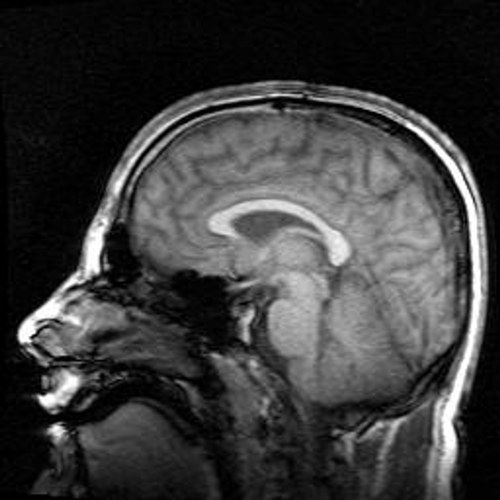
Developed machine-learning methods for whole-brain MRI classification and segmentation.
Achieved 83% cross-validated accuracy for Alzheimer's disease classification using SVMs.
Developed a 3D U-Net for brain-region segmentation.
Simulation & SystemsIsaac Lab, Isaac Sim, MuJoCo, Newton, CUDA graph capture, contact solver tuning, ROS/ROS2, CUDA, Linux
ProgrammingPython, C++, MATLAB, Java
Robotic Platforms
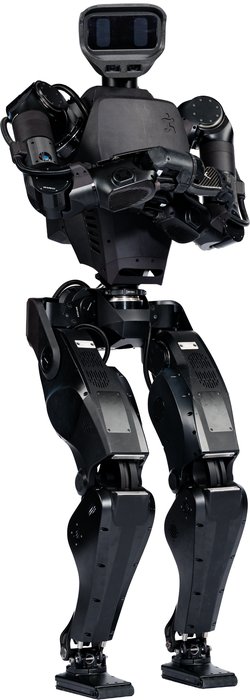
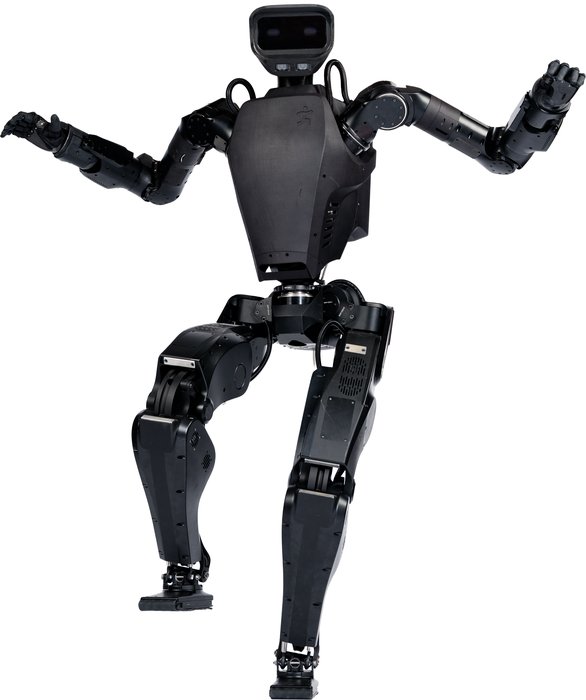
Alex, IHMC
Humanoid locomotion, balance, whole-body control, and recovery.
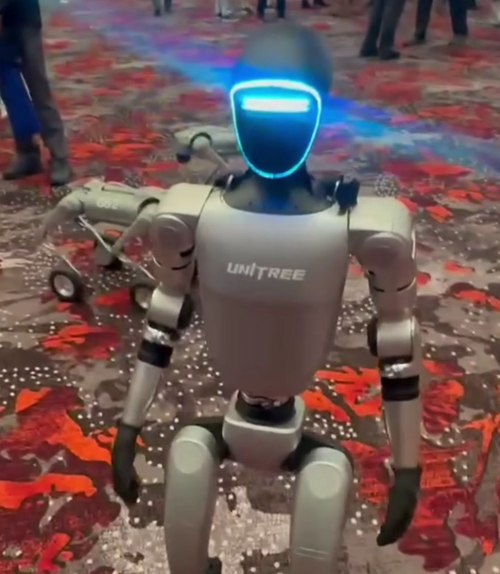
Unitree H1-2
RL-based balance and recovery, multi-contact stand-up, sim-to-sim transfer, and hardware deployment.
Unitree Go2
Learning-based locomotion and robot simulation.
FedEx ROXO, DEKA
Multimodal perception, occupancy mapping, calibration, and autonomous navigation.
Outside the Lab
I play alto saxophone with PBC Band, a community band in Pensacola. Outside robotics, I enjoy chess, running, hiking, photography, board games, and trying new food.
Get in Touch
Interested in humanoid robots, embodied intelligence, or physically grounded learning?